
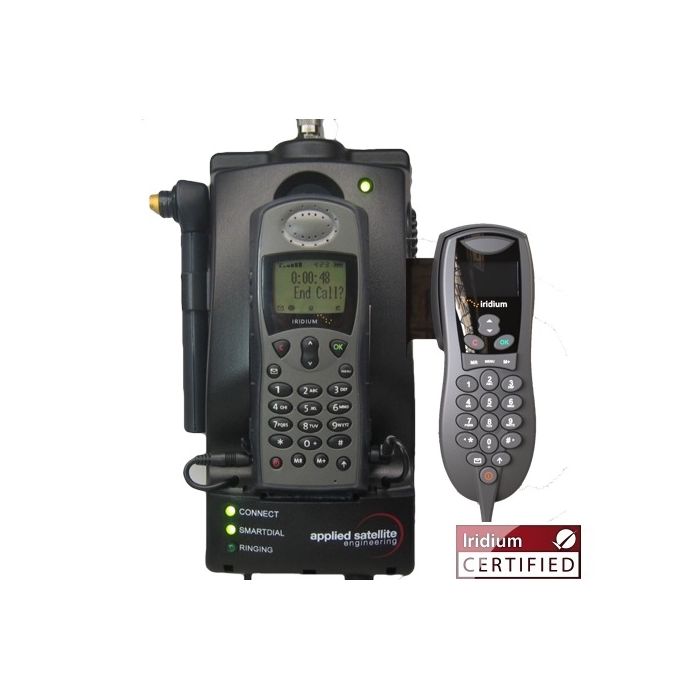
DISCONTINUED - ASE Docking Station w/ POTS, RS232 & Handset for Iridium 9505A Satellite Phones (ASE-MC03-H)
Out of stock
- BRAND:
- ASE
- AVAILABILITY:
- DISCONTINUED
- SKU:
- ASE-MC03-H-9505A-Dock-Station
DISCONTINUED - ASE Docking Station w/ POTS, RS232 & Handset for Iridium 9505A Satellite Phones (ASE-MC03-H)
DISCONTINUED - ASE Docking Station w/ POTS, RS232 & Handset for Iridium 9505A Satellite Phones (ASE-MC03-H)
ASE-MC03-H sits within a broader historical category of “satphone docking stations,” which were especially important in the Iridium 9505A era because organizations often wanted the handset to remain secured and ready in an office, on a vessel, or in a vehicle—while still allowing the handset to be undocked and carried when users left the installation. Product descriptions for the MC03 family emphasize this “dock indoors / undock and take it with you” workflow.
Design and Features
Docking cradle for installed use
At its core, ASE-MC03-H is a physical cradle that holds the Iridium 9505A handset in a consistent orientation and connection state. This stabilizes day-to-day operation in environments where a handheld phone is inconvenient (e.g., rough seas, moving vehicles, shared operations rooms) and helps ensure the satphone is always in a known location for emergency or business continuity calls.
POTS (RJ-11) interface for analog phones and PBX
A defining feature is the RJ-11 POTS port that enables the Iridium 9505A satellite link to be used through:
-
a standard analog phone set, or
-
an analog PBX/PABX extension (installation dependent)
Reseller descriptions explicitly position the dock as enabling satellite communications “with standard analog phone sets” or a “company’s PBX system.”
RS-232 serial connectivity for legacy data workflows
ASE-MC03-H includes an RS-232 port, which reflects the era’s reliance on serial-connected equipment and legacy connectivity methods in maritime and industrial settings. Vendor descriptions associate the MC03 platform with legacy Iridium workflows (including serial data contexts) and note the presence of POTS and RS-232 as core elements of the system.
Bundled corded handset (“-H” configuration)
The ASE-MC03-H designation is used in reseller catalogs to indicate a bundle that includes a corded handset in addition to the docking base. This supports a traditional “telephone handset” calling experience—useful for privacy, clearer audio in noisy spaces, and familiar operations center workflows.
Hands-free/headset and accessory ecosystem (varies by listing)
Some secondary-market and catalog-style listings for the broader MC03 family mention additional audio connectivity options (e.g., hands-free/headset). Because bundled accessories can vary between “base dock,” “handset bundle,” and refurbished/secondary-market offerings, buyers typically confirm exactly what is included for the specific ASE-MC03-H unit being purchased.
Technology and Specifications
Network and band
Reseller specifications for the ASE-MC03-H list:
-
Network: Iridium
-
Frequency band: L-band (1–2 GHz)
These entries reflect the Iridium 9505A’s operating environment and are mainly useful for procurement categorization rather than RF engineering (since the RF performance is primarily determined by the handset and the installed antenna system).
System architecture: “satellite handset as the modem”
Unlike modern all-in-one fixed terminals, the ASE-MC03-H relies on the Iridium 9505A handset as the active radio. The dock adds installed interfaces (POTS and RS-232) and provides a structured way to keep the handset deployed and operational in a permanent location.
Documentation and installer guidance
A publicly available ASE docking station QuickStart Guide exists for the MC03 docking station family, describing it as the Applied Satellite Engineering Docking Station and directing users to a fuller user guide and installer’s guide for more detail.
(As with most installed satphone systems, correct antenna selection/placement and site grounding practices are usually critical—but those details depend on the specific installation and antenna kit.)
Applications and Use Cases
Remote offices and business continuity
ASE-MC03-H is often described as a solution for using a 9505A “indoors and outdoors,” pairing well with remote offices where a satellite fallback line is required during terrestrial outages. The POTS interface makes it easy for staff to place calls using a normal analog handset, while the satphone remains docked and ready.
Maritime operations
Marine environments historically relied heavily on analog voice circuits and serial-connected equipment. A dock that offers RJ-11 POTS and RS-232 aligns with that ecosystem, and refurbished suppliers explicitly market MC03 docking stations for vessel use.
Vehicle installations and mobile teams
For mobile teams operating outside cellular coverage, an installed satphone dock keeps communications gear consistent and accessible. The bundled corded handset supports a familiar calling workflow without requiring personnel to handle the satphone itself during operations.
Legacy serial data and specialized integrations
The RS-232 port can be relevant for older telemetry, serial devices, or specialized applications that were designed around serial connectivity. While the practical set-up depends on the handset/service configuration, the presence of RS-232 is one reason docks like the MC03 series remain relevant in legacy deployments.
Advantages / Benefits
Familiar calling experience via analog telephony
The dock’s RJ-11 POTS interface can reduce training overhead because many users already understand analog desk phones and PBX extensions. This can be especially helpful in emergency scenarios where a consistent “pick up handset and dial” workflow is preferred.
Supports legacy infrastructure through RS-232
RS-232 remains common in older industrial and maritime systems. Including RS-232 allows the satphone installation to connect into environments that haven’t modernized to IP-only systems.
Portable handset retained
Product descriptions highlight that users can undock the handset and take it with them, preserving the 9505A’s portable nature rather than forcing an always-fixed terminal approach.
Bundled handset accessory (ASE-MC03-H)
Compared with dock-only SKUs, the “-H” bundle is designed for deployments that require a dedicated corded handset at the installation point, which can be useful for privacy and for consistent operator workflow.
FAQ Section
What is the ASE-MC03-H docking station?
The ASE-MC03-H is a discontinued docking station bundle for the Iridium 9505A that adds RJ-11 POTS and RS-232 serial interfaces and includes a corded handset for installed calling.
How does ASE-MC03-H work?
You dock the Iridium 9505A handset into the cradle, then connect an analog phone/PBX to the RJ-11 port and supported equipment to the RS-232 port. The bundled corded handset provides a handset-style calling workflow at the installation point.
Why is ASE-MC03-H important?
It bridges an Iridium satphone to legacy telephony and serial infrastructure, which is still common in maritime and industrial environments—and it provides a consistent installed communications point while keeping the handset portable.
What are the benefits of POTS (RJ-11) on a satellite docking station?
POTS allows users to place satellite calls using standard analog phones or PBX extensions, which can simplify operations and training compared to operating the satphone keypad directly.
What does RS-232 add to an Iridium 9505A dock?
RS-232 provides a serial data interface that can support legacy connectivity needs and older integration workflows common in industrial and maritime deployments.
Summary
The ASE-MC03-H is a discontinued installed docking solution for the Iridium 9505A that combines RJ-11 POTS telephony, RS-232 serial connectivity, and a bundled corded handset to support legacy operational environments. While no longer widely stocked, it remains relevant for organizations maintaining 9505A fleets and requiring analog/serial interfaces for business continuity, maritime operations, and remote-site communications—often through refurbished or secondary-market sourcing.
Specifications
| BRAND | ASE |
|---|---|
| NETWORK | IRIDIUM |
| FREQUENCY | L BAND (1-2 GHZ) |
Related Products
Out of stock
Out of stock

Out of stock